
Derek H.'s Dark Web Encounter: Lessons from Counterfeit Ambition
A Denver man's attempt to launder counterfeit $100 bills through ATMs ended with arrest after banks flagged unusual deposit patterns and pending transaction reviews.
Posted: · Checked: November 19, 2026 · Editor: Rowan Nightshade
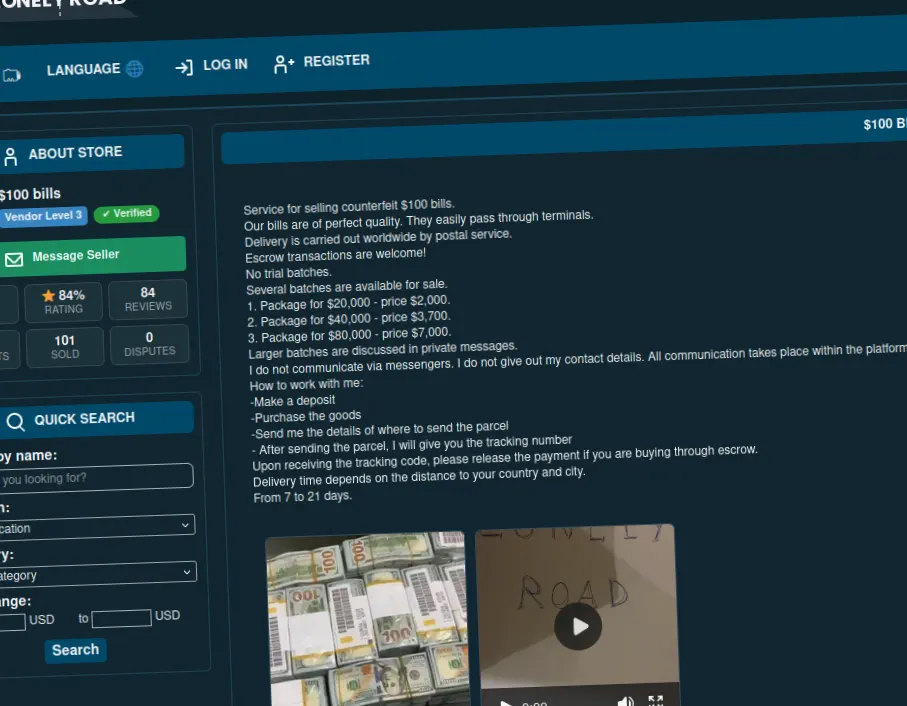
We examined a case that unfolded in early 2025 involving a Colorado resident and a failed counterfeit currency scheme. The individual believed he could bypass traditional detection methods by using automated banking machines instead of human cashiers. His plan collapsed within days. The incident reveals how modern banking security operates behind the scenes. We broke down the timeline and identified the critical mistakes that led investigators to his door.
Where Did the Fake Money Come From?
The Darknet Purchase
Derek H., age 29, ordered forty counterfeit $100 dollar bills from a fake money darknet vendor. He paid $1,200 in cryptocurrency during January 2025. The seller advertised the notes as superdollar quality with UV protection and magnetic features. The batch consisted of 2009 series bills designed to mimic authentic currency.
The Promise of Realistic Counterfeits
The fake money site claimed their prop money dollars included working watermarks and security strips. Derek believed these counterfeit $100 dollar bill copies would pass automated verification. He avoided searching for prop money for sale nearby to prevent local traces. The realistic fake money australia market uses similar tactics but targets different banking systems.
How Did the ATM Scheme Work Initially?
The Deposit Strategy
He planned to feed fake 100 dollar bills through cash-accepting machines. The terminals would scan each note and credit his account electronically. He could then withdraw or move funds as legitimate balances. The approach avoided face-to-face interaction with bank staff who might inspect bills manually.
Early Success and Growing Confidence
Two machines processed 800 dollars in counterfeit currency without issue. A third rejected one note and returned it. A fourth accepted the deposit but marked it for pending review. He never received notification that his account was being monitored.
What Triggered the Bank Investigation?
Pattern Recognition Systems
We know banks use automated tools to track deposit patterns. Sudden large cash movements from dormant accounts trigger immediate alerts. Derek's profile showed unusual ATM activity concentrated in a brief period. Manual review began once the system flagged these anomalies.
Serial Number Analysis
Counterfeit bills frequently carry matching serial codes across multiple notes. Derek's counterfeit $20 dollar bills underwent backend comparison during processing. Duplicate number sequences prompted human analyst escalation. His purchase cost indicated poor replication quality that couldn't survive verification. Low-grade duplication techniques failed standard authentication protocols.
Why Did Law Enforcement Get Involved?
Account Freeze and Investigation
The morning after his fourth deposit, Derek lost all account access. Internal fraud teams forwarded evidence to federal agencies. In the United States, the Secret Service investigates counterfeit currency offenses nationwide. Agents traced the deposits to specific ATM locations and timestamps.
Arrest and Charges
Three weeks after the freeze, agents arrested Derek at his Denver residence. Possession and attempted use of forged bills carries federal penalties. Even if someone tries to buy fake dollars for personal use or pranks, depositing them constitutes fraud. The case demonstrates that buy counterfeit 20 dollar bills schemes fail under automated scrutiny.
What Went Wrong With This Plan?
Derek's mistake was assuming ATMs lacked the verification capabilities of human tellers. Modern banking systems cross-reference serial numbers and monitor behavioral patterns in real time. The fake money darknet marketplace promised undetectable quality but delivered easily flagged counterfeits. We found that even small-scale attempts trigger multi-layered security protocols. The website where the purchase was made likely continues operating despite this arrest, targeting other buyers. Federal agencies track these vendors but cannot eliminate every fake money site immediately.
Questions readers ask
Can ATMs detect counterfeit bills during deposits?
ATMs scan for magnetic strips, UV features, and serial numbers during cash acceptance. Backend systems compare serial data across transactions to identify duplicates. Flagged deposits trigger manual review and account freezes within hours.
What happens if you accidentally deposit fake money?
Banks investigate the source and intent behind the deposit. Accidental cases may result in account corrections and warnings. Intentional fraud leads to federal charges and Secret Service involvement.
How do banks detect patterns in counterfeit deposits?
Automated systems monitor deposit frequency, amounts, and account history. Sudden cash spikes from dormant accounts raise immediate alerts. Serial number databases cross-reference bills across multiple locations.
Why do darknet counterfeit vendors still operate?
Law enforcement prioritizes large-scale operations over individual sellers. Vendors frequently change marketplace identities and domains. Tracking cryptocurrency payments across jurisdictions remains challenging despite ongoing efforts.